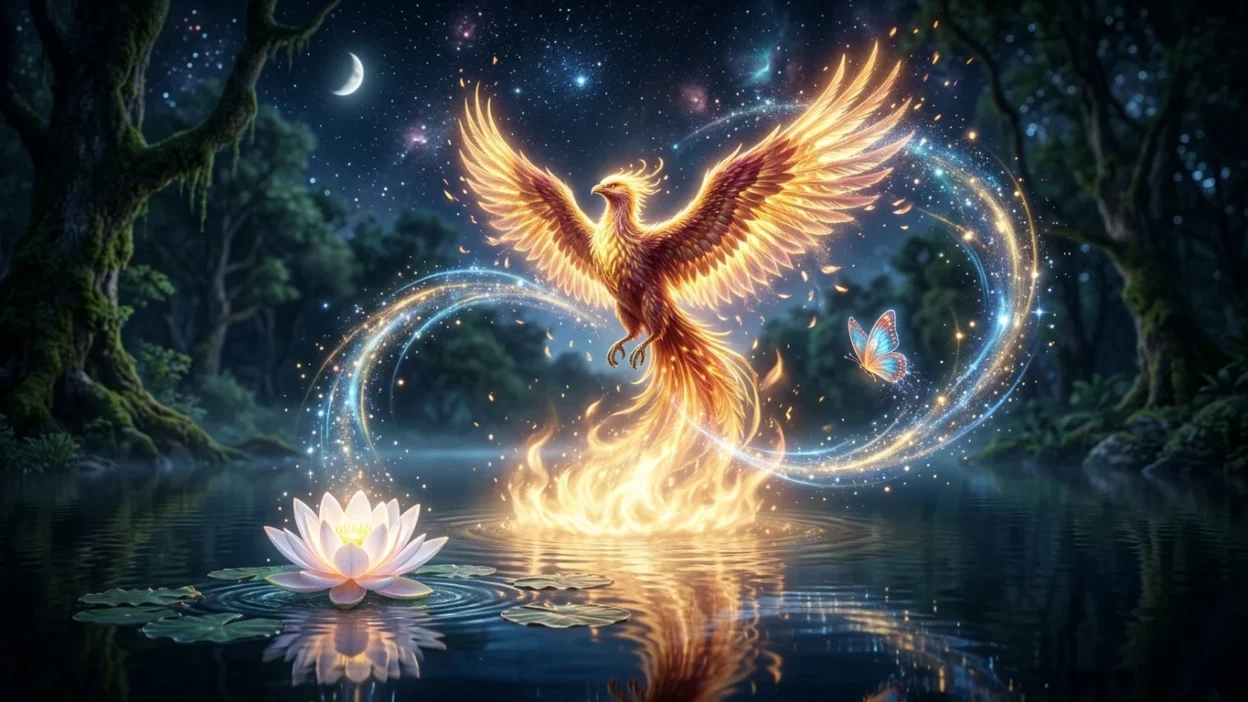
Reincarnation symbolism represents the idea of renewal, rebirth, transformation, and the continuation of existence beyond a single lifetime. Across different spiritual and philosophical traditions, reincarnation is connected with cycles of life, death, return, karma, spiritual growth, and the possibility of beginning again.
Symbols associated with reincarnation often use circles, butterflies, phoenixes, lotus flowers, eggs, spirals, and cycles of nature to express the movement from one stage of existence into another. These images can also represent personal transformation, leaving the past behind, and emerging with a renewed sense of purpose.
Reincarnation Symbolism Meaning (Clear Definition)
Reincarnation symbolism refers to images, objects, and ideas that represent rebirth, renewal, repeated existence, transformation, and the continuation of life or consciousness.
The central idea is that existence does not necessarily end with one lifetime. In traditions that teach reincarnation, life may be understood as part of a larger cycle involving birth, death, and rebirth.
Symbolically, reincarnation can also represent a fresh beginning in ordinary life.
What Does Reincarnation Symbolism Represent?
Reincarnation symbolism can represent several powerful ideas.
| Symbolic Meaning | What It Represents |
|---|---|
| Rebirth | Beginning a new stage of existence |
| Renewal | Starting again with new energy |
| Transformation | Changing from one state into another |
| Cycles | The continuous movement of life |
| Spiritual Growth | Learning through experiences |
| Continuity | Existence continuing beyond one stage |
| Release | Leaving an old identity behind |
| New Beginnings | Entering a fresh chapter |
Reincarnation symbolism may also represent:
- Personal transformation
- Healing
- Second chances
- Spiritual awakening
- Hope
- Evolution
- Change
- Self-discovery
Spiritual Meaning of Reincarnation Symbolism
Spiritually, reincarnation symbolism is strongly connected with the idea of continued spiritual development.
In Hinduism, Buddhism, Jainism, and several other Indian traditions, ideas surrounding rebirth are connected with karma and samsara, although each tradition understands these concepts differently.
Reincarnation symbolism can therefore represent an ongoing journey in which experiences contribute to learning, development, and eventual liberation.
Spiritually, it may symbolize:
- Spiritual evolution
- Rebirth
- Karma
- Life lessons
- Transformation
- Liberation
- Inner awakening
- Continuity
The deeper message is often that change does not necessarily mean an ending. It can represent movement toward another stage of existence.
Biblical / Religious Meaning of Reincarnation Symbolism
Reincarnation is not a central teaching of mainstream Christianity, Judaism, or Islam, and it should not be presented as a biblical doctrine.
Christian traditions generally teach resurrection rather than reincarnation, meaning the concepts are fundamentally different.
Reincarnation is more strongly associated with Hindu, Buddhist, Jain, and certain other philosophical and religious traditions. Even among these traditions, ideas about what continues after death and how rebirth occurs vary considerably.
Therefore, the meaning of reincarnation symbolism depends heavily on the religious or philosophical framework being considered.
Reincarnation Symbolism in History and Culture
Ideas about rebirth and repeated existence have appeared throughout human history.
Ancient Indian philosophical traditions developed detailed teachings concerning rebirth, karma, samsara, and liberation.
In Hindu traditions, reincarnation is generally understood within the broader cycle of samsara.
Buddhist teachings discuss rebirth and samsara while differing from the idea of an eternal, unchanging soul.
Jain philosophy also includes rebirth and karma within its understanding of spiritual liberation.
Beyond religion, cultures around the world have used natural cycles—such as seasonal changes, seeds becoming plants, and the renewal of nature—as metaphors for death and rebirth.
Reincarnation Symbolism in Literature and Art
Reincarnation is a powerful theme in literature because it allows writers to explore identity, memory, love, loss, destiny, and transformation.
A character returning in another life can symbolize unfinished experiences or the possibility of a new beginning.
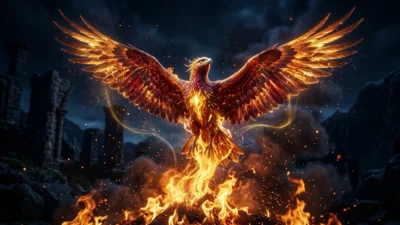
In art, the phoenix is frequently used as a broader symbol of rebirth and renewal.
The butterfly can represent transformation from one state of existence into another.
The lotus flower can symbolize spiritual awakening and renewal.
A spiral can represent continuous movement, evolution, and recurring cycles.
These symbols do not all specifically represent reincarnation in every culture, but they can communicate closely related ideas of renewal and transformation.
Dream Meaning of Reincarnation Symbolism
Dreaming about reincarnation may reflect transformation, identity, unresolved experiences, or the feeling that you are entering a completely different stage of life.
Dreaming that you are living another life may symbolize curiosity about who you could become or a desire to escape an old identity.
Meeting someone who feels strangely familiar may reflect emotional familiarity, strong connections, or memories associated with that person rather than proof of a past life.
Being reborn in a dream may symbolize a fresh beginning after a difficult period.
Seeing yourself as a completely different person may represent changes in your personality, priorities, or understanding of yourself.
Dreams about reincarnation are usually best interpreted through personal emotions and circumstances rather than treated as literal evidence of a previous life.
Modern Meaning of Reincarnation Symbolism
Today, reincarnation symbolism is often used to represent personal reinvention and second chances.
Someone starting a new career, leaving behind an unhealthy relationship, moving to a new place, or adopting a completely different lifestyle may describe the experience as being “reborn.”
Reincarnation-inspired tattoos and artwork can symbolize transformation, spiritual beliefs, personal evolution, or the beginning of a new chapter.
The symbol can therefore have meaning even for people who do not literally believe in reincarnation.
Frequently Asked Questions
What does reincarnation symbolism mean?
Reincarnation symbolism represents rebirth, renewal, transformation, spiritual growth, cycles of existence, second chances, and new beginnings.
What does reincarnation symbolize spiritually?
Spiritually, reincarnation can symbolize rebirth, karma, spiritual development, life lessons, samsara, transformation, and the journey toward liberation.
What are common symbols of reincarnation?
Common symbols associated with reincarnation and rebirth include the phoenix, butterfly, lotus, spiral, circle, egg, snake, and cyclical patterns.
What does dreaming about reincarnation mean?
Dreaming about reincarnation may symbolize personal transformation, a new chapter, identity changes, unresolved experiences, or a desire for renewal.
Is reincarnation the same as resurrection?
No. Reincarnation generally refers to rebirth into another life, while resurrection refers to being raised from death. Different religions understand these concepts in very different ways.
Conclusion
Reincarnation symbolism represents one of humanity’s most enduring ideas: the possibility that life continues through cycles of transformation and renewal. Whether understood literally as rebirth or symbolically as personal change, reincarnation imagery speaks to the desire for second chances, spiritual growth, and a fresh beginning.
The butterfly emerging from its transformation, the phoenix rising again, the lotus opening from muddy water, and the endless circle all communicate a similar message: endings can become beginnings. Reincarnation symbolism reminds us that identity can evolve, painful chapters can close, and new possibilities can emerge from profound change.
Ultimately, its deepest meaning is not simply about returning to life, but about transformation—the idea that existence can move through different stages while continually offering opportunities for growth, understanding, and renewal.

Hazel Evermont is an SEO copywriter who enjoys creating engaging online content that is both informative and easy to navigate. She focuses on delivering articles that prioritize user experience while following current search optimization standards. Her writing style is clear, concise, and reader-friendly.