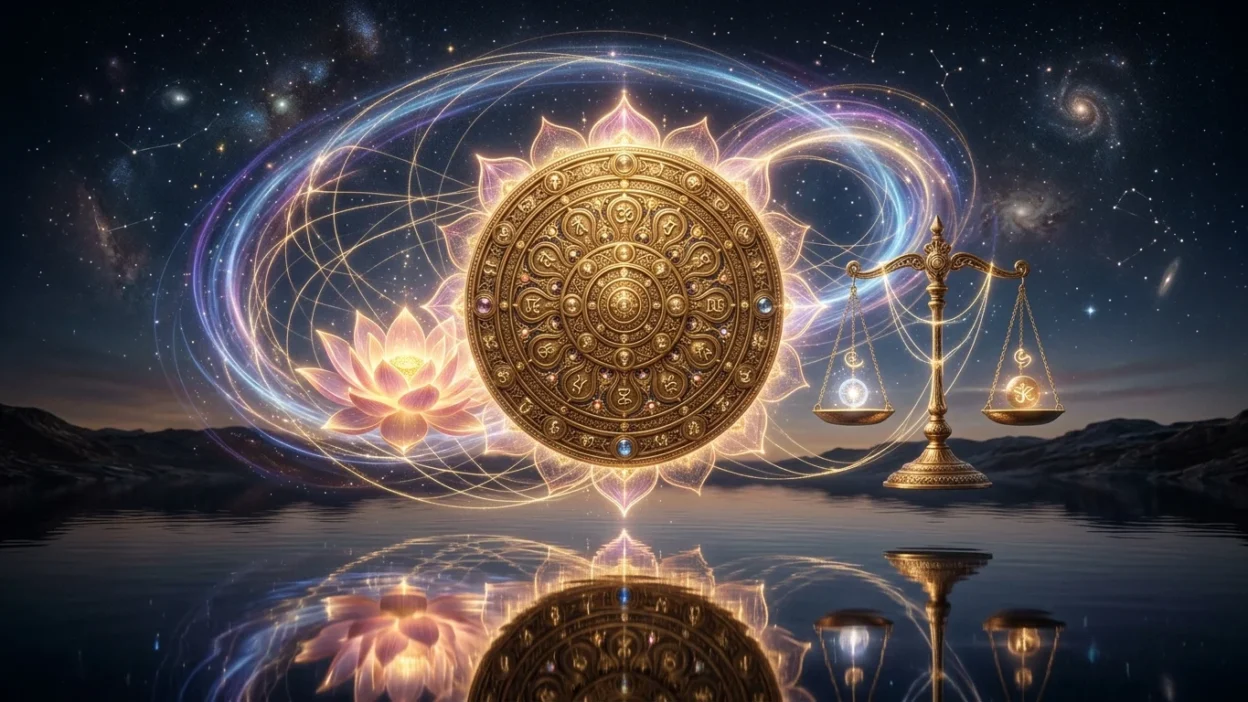
Karma symbolism represents the connection between actions, intentions, consequences, and personal growth. Across spiritual and philosophical traditions, karma is often understood as the principle that actions have consequences that can influence future experiences. Its symbols commonly represent balance, cause and effect, justice, responsibility, transformation, and the continuous journey of learning.
Today, karma symbolism appears in religion, philosophy, literature, art, jewelry, tattoos, dreams, and popular culture. Although karma is sometimes simplified as “what goes around comes around,” its deeper meaning is more complex and focuses on intention, ethical action, responsibility, and spiritual development.
Karma Symbolism Meaning (Clear Definition)
Karma symbolism refers to symbols and ideas representing cause and effect, moral responsibility, balance, and the consequences of actions.
The concept of karma is especially important in Hinduism, Buddhism, Jainism, and related Indian philosophical traditions, although interpretations differ between traditions. Karma is not simply a system of reward and punishment; it is more deeply connected with actions, intentions, consequences, and the process of personal and spiritual development.
What Does Karma Symbolism Represent?
Karma symbolism can represent several powerful ideas.
| Symbolic Meaning | What It Represents |
|---|---|
| Cause and Effect | Actions producing consequences |
| Balance | The relationship between actions and outcomes |
| Responsibility | Taking ownership of one’s behavior |
| Justice | Ethical consequences and moral order |
| Transformation | Learning through experience |
| Intention | The importance of motives behind actions |
| Growth | Developing wisdom through life experiences |
| Cycles | Repeating patterns and continuing life processes |
Karma symbolism may also represent:
- Compassion
- Accountability
- Wisdom
- Patience
- Self-awareness
- Forgiveness
- Spiritual growth
- Inner transformation
Spiritual Meaning of Karma Symbolism
Spiritually, karma symbolism represents the importance of conscious action and intention. It encourages people to consider how their choices affect themselves, other people, and their future experiences.
In many traditions, karma is connected with learning rather than simple punishment. Difficult experiences may become opportunities for reflection, ethical development, and greater awareness.
Spiritually, karma symbolism may represent:
- Spiritual growth
- Moral responsibility
- Self-awareness
- Compassion
- Inner balance
- Transformation
- Wisdom
- Conscious living
The deeper message is that our actions matter, and developing positive intentions can contribute to personal and spiritual growth.
Biblical / Religious Meaning of Karma Symbolism
Karma is not a biblical concept and should not be treated as identical to Christian teachings about sin, judgment, or divine providence.
However, some biblical principles share the broader idea that actions have consequences. Teachings about sowing and reaping, moral responsibility, forgiveness, compassion, and accountability can appear similar at a general symbolic level, although they arise from a different theological framework.
In Hinduism, Buddhism, and Jainism, karma has much more specific philosophical and religious meanings. These traditions differ in how karma relates to rebirth, intention, liberation, and ethical conduct.
Karma Symbolism in History and Culture
Karma has deep roots in Indian philosophical and religious traditions.
In Hindu traditions, karma is connected with action, duty, intention, and the consequences of actions within the broader cycle of life and rebirth.
Buddhist teachings emphasize intentional action and its consequences while connecting karma with the path toward liberation from suffering.
Jain philosophy places strong emphasis on ethical conduct and the consequences of actions within its understanding of the soul and liberation.
Over time, the word “karma” entered global popular culture and became commonly associated with the idea that people eventually experience the consequences of their actions.
Karma Symbolism in Literature and Art
In literature, karma symbolism often represents justice, consequences, redemption, transformation, and recurring patterns.
A character who causes harm may eventually face consequences that force them to confront their behavior.
A cycle or circle can symbolize recurring actions and experiences.
Scales can represent balance and justice.
A wheel can symbolize cycles of life, change, and spiritual development.
Artists also use lotus flowers, circles, mandalas, interconnected patterns, and flowing paths to explore themes related to karma, transformation, and spiritual awareness.
Dream Meaning of Karma Symbolism
Dreaming about karma often reflects thoughts about consequences, relationships, responsibility, or unresolved experiences.
Seeing a circle or repeating pattern may symbolize a recurring situation or behavior that needs attention.
Being rewarded in a dream may represent feelings of achievement, recognition, or satisfaction with your actions.
Being punished may reflect guilt, fear of consequences, or self-criticism rather than a prediction of future events.
Helping someone in a dream may symbolize compassion, forgiveness, or a desire to create more positive relationships.
Dreams about karma can encourage reflection on personal choices and emotional patterns without necessarily predicting that something will happen in waking life.
Modern Meaning of Karma Symbolism
Today, karma symbolism is often associated with accountability, fairness, personal responsibility, and the belief that actions have consequences.
People may use karma-related symbols in tattoos or jewelry to represent balance, personal growth, spiritual beliefs, or lessons learned from past experiences.
The phrase “karma” is also frequently used in everyday conversation to describe situations where someone’s actions appear to produce corresponding consequences.
However, the traditional concept is much deeper than simple revenge or instant justice. Karma is fundamentally concerned with action, intention, consequence, and spiritual development.
Frequently Asked Questions
What does karma symbolism mean?
Karma symbolism represents cause and effect, responsibility, balance, intention, consequences, personal growth, and spiritual transformation.
What does karma symbolize spiritually?
Spiritually, karma symbolizes conscious action, moral responsibility, self-awareness, compassion, learning, and the consequences of intentions and behavior.
What are common symbols of karma?
Common symbolic representations include circles, wheels, scales, interconnected patterns, lotus flowers, and cycles representing balance and cause and effect.
What does dreaming about karma mean?
Dreaming about karma may reflect thoughts about consequences, responsibility, guilt, forgiveness, recurring patterns, or unresolved relationships.
Is karma the same as fate?
No. Karma concerns actions and their consequences, while fate generally refers to events believed to be predetermined or unavoidable.
Conclusion
Karma symbolism carries a powerful message about the connection between actions, intentions, and consequences. Rather than simply representing punishment or reward, karma is traditionally understood through deeper ideas of responsibility, ethical behavior, personal growth, and spiritual development. Its symbolism encourages people to consider how their choices affect themselves and others.
The enduring appeal of karma symbolism comes from its reminder that our actions matter. A kind decision, compassionate response, or honest intention can contribute to meaningful change, while harmful patterns can provide opportunities for reflection and transformation. Whether represented through circles, wheels, scales, lotus flowers, or interconnected patterns, karma ultimately symbolizes the continuing journey toward greater awareness, balance, wisdom, and conscious living.

Hazel Evermont is an SEO copywriter who enjoys creating engaging online content that is both informative and easy to navigate. She focuses on delivering articles that prioritize user experience while following current search optimization standards. Her writing style is clear, concise, and reader-friendly.